Analysis of Oil Pipeline Spill in the US from 2010-2017: Data-Driven Insights for Risk Mitigation and Operational Efficiency
The goal of this analysis is to analyze historical oil pipeline spill incidents using Power BI, identifying key trends, financial impacts, environmental consequences, and safety concerns.
This project aims to provide data-driven insights to enhance pipeline management, improve response strategies, and mitigate risks in high-susceptibility regions.
Key Insights:
✪ Significant Variability in Spill Volumes Over Time: The data shows dramatic fluctuations in spill volumes—spikes in 2010, 2013, and 2015 contrasted with much lower volumes in 2012 and 2014- indicating inconsistent pipeline performance and potential external influences affecting spill magnitude.
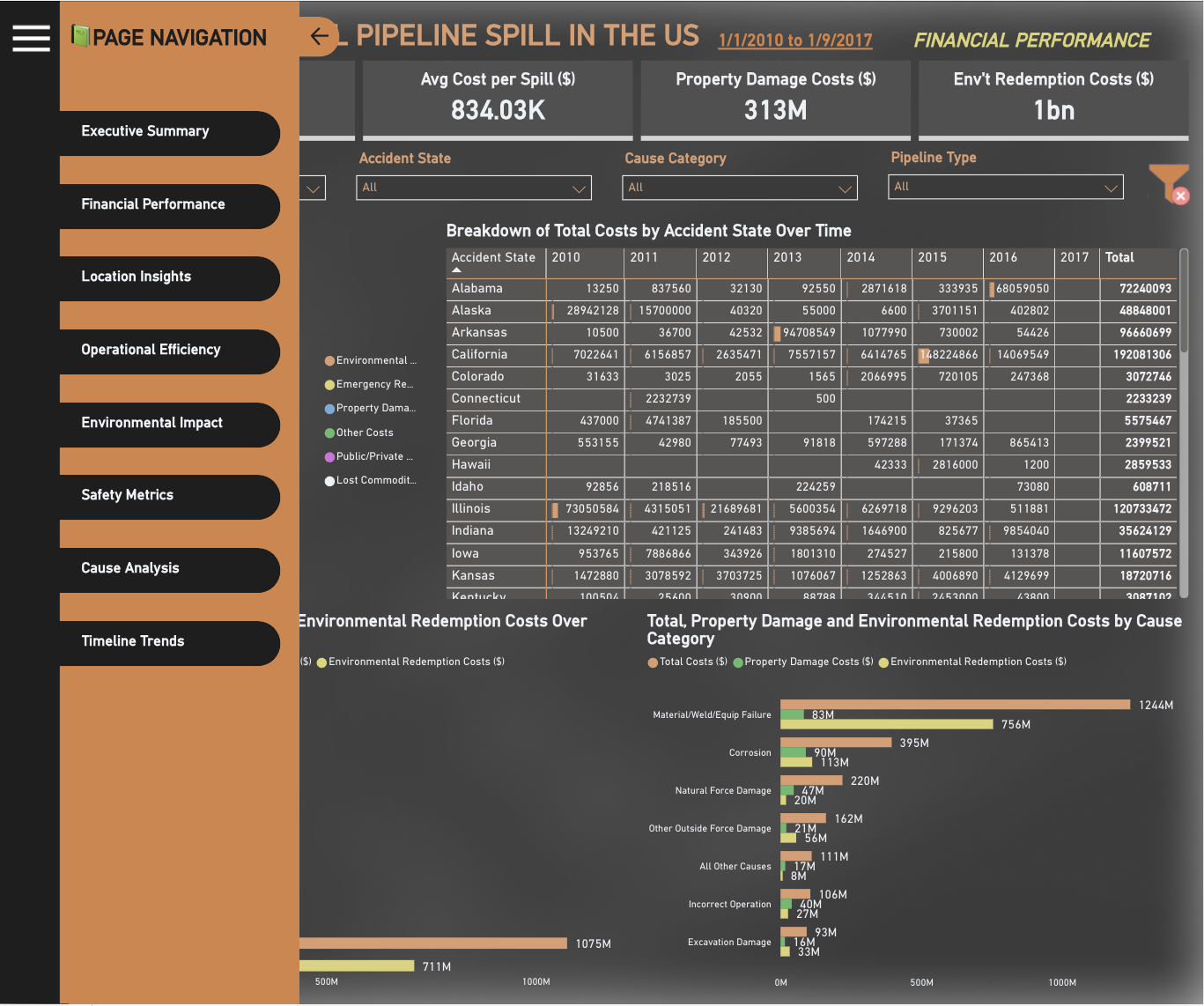
✪ Substantial Financial and Environmental Impact: With total costs nearing $2 billion—where environmental redemption costs account for about half—and major incidents incurring hundreds of millions in expenses, it is clear that spills impose a heavy financial burden and severe environmental consequences.
✪ Geographic Hotspots Indicate Regional Vulnerabilities: Certain states, notably Texas, Oklahoma, and California, consistently record the highest spill frequencies and volumes. These areas, which are also prone to natural disasters, highlight regional vulnerabilities that demand targeted risk management.
✪ Operational Inefficiencies in Response Times: The average shutdown durations vary widely—from as low as 43 days to peaks of 183 days—indicating inconsistency in response and maintenance practices.
This suggests that operational inefficiencies might be contributing to extended downtime, thereby affecting recovery efforts and overall performance.
✪ Primary Causes Linked to Equipment and Infrastructure Failures: The dominant spill causes, particularly material/weld/equipment failures and corrosion, highlight that technical issues and aging infrastructure
play a significant role in spill incidents. This insight underscores the need for targeted infrastructure upgrades and enhanced technical oversight.
Recommendations:
✪ Implement Enhanced Monitoring and Preventative Maintenance: Invest in advanced real-time monitoring technologies (e.g., smart sensors, drones) and enforce rigorous, scheduled inspections to detect early signs of pipeline deterioration, especially in high-risk regions.
✪ Strengthen Emergency Response and Training Programs: Develop and regularly update comprehensive emergency response plans, coupled with extensive training drills for operators and emergency responders, to ensure rapid, coordinated actions that minimize both environmental and financial impacts during incidents.
✪ Upgrade Infrastructure and Enforce Stricter Regulatory Oversight: Prioritize modernizing aging pipeline infrastructure—using corrosion-resistant materials and state-of-the-art construction practices—and enhance regulatory enforcement to reduce operational failures and mitigate spill risks.
✪ Increase Investment in Research & Development (R&D): Foster innovation by allocating resources to develop improved pipeline materials, state-of-the-art leak detection systems, and automated shutdown technologies. Collaborate with industry partners and research institutions to pilot and scale cutting-edge solutions that address technical vulnerabilities.
To learn more about this project, click the view report button.